Why Pair Selling Is the Future of Sales Development
The traditional SDR model is burning people out. Pair Selling is the third path: AI runs the prospecting grind, your reps run the relationships and close.


Most sales development reps don't last two years in the role. It's rarely a talent problem. The job asks people who are good at conversation and persuasion to spend their days doing work a machine does better: scraping contact lists, rewriting the same cold email 40 times, dialing numbers that ring out, chasing replies that never come.
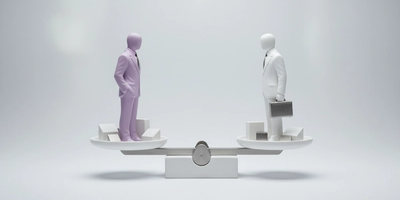
That has pushed companies toward a bad binary. Either you keep grinding humans through tasks that drain them, or you hand the whole job to AI and hope software can build the trust that closes a six-figure deal. Neither works well. There is a third option, and the teams adopting it are quietly pulling ahead.
Pair Selling is that third path. Instead of choosing between people and AI, it gives each side the part of the job it is actually good at. This piece breaks down why the old SDR model is failing, why full automation falls short on complex deals, and how the Driver and Navigator split changes the economics of sales development.
Key takeaways
- Sales development has a churn problem: SDR tenure stalls below two years, and replacing each rep costs roughly half to twice their annual salary.
- Going AI-only backfires on complex deals. Gartner expects AI agents to outnumber sellers tenfold by 2028, yet fewer than 40% of sellers say those agents have improved their productivity.
- Pair Selling splits the work. AI runs the prospecting grind (targeting, verified lists, personalized outreach); your reps run the relationships and close.
- You get the scale without losing the human touch, which is still the only thing that moves an enterprise buyer.
The traditional SDR model is running on empty
Something is structurally wrong with how we staff sales development. The role carries some of the highest turnover in B2B sales. The Bridge Group's SDR Metrics Report, the benchmark survey for the seat, has tracked tenure stalling well under two years and annual attrition running close to a third of the team. You ramp someone for months, they finally get productive, and then they leave.
The math is brutal. Gallup puts the cost of replacing an employee at one-half to two times their annual salary once you count recruiting, training, lost productivity and the months a new hire needs to ramp. On a ten-person SDR team, that is a six-figure leak every year, and it repeats.
The deeper problem is what we ask these people to do all day. Salesforce's State of Sales research found reps spend less than 30% of their time actually selling. The rest disappears into research, data entry, list-building and admin. We hire people for empathy and quick thinking, then bury them in work that needs neither. The traditional SDR model is fundamentally broken, and that is exactly why SDRs burn out. It is the predictable result, not a surprise.
Why replacing reps with AI falls short
Faced with that churn, some teams reach for the obvious shortcut: cut the humans and let AI run the whole job. A small but growing share have gone fully autonomous, with no human SDRs at all.
The results are uneven. AI is genuinely good at the high-volume work, finding accounts, building contact lists, personalizing at scale, sending the first touch. It is far weaker at the part that closes complex B2B deals: reading a room, handling an objection that was never in the script, building enough trust that a buyer signs off on a serious purchase. Those are human skills, and they do not automate cleanly.
The adoption numbers make the point better than any pitch. Gartner predicts AI agents will outnumber human sellers tenfold by 2028, yet fewer than 40% of sellers say those agents have actually improved their productivity. Capability is exploding while payoff lags, and the gap is the human element. Full automation can fire off thousands of messages and surface a few interested prospects, but it struggles to earn the trust that turns a warm conversation into a signed contract. That is why replacing your sales team with AI tends to fail on anything past a transactional sale.
What Pair Selling actually is
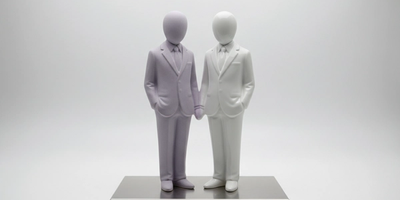
Pair Selling is a model where AI agents work as partners to salespeople, not stand-ins for them. The idea borrows from pair programming, where two developers share one task with split roles: one writes the code, the other keeps an eye on the bigger picture.
In Pair Selling, the split is just as clean. The AI is the Navigator. It finds the right accounts, builds and verifies the contact list, writes the personalized outreach and runs the campaign, sending the emails and queuing each call and LinkedIn touch as a ready-to-run task. The salesperson is the Driver. They make the calls, send the LinkedIn messages, handle the objections that go off-script, and book and close the deals.
That is the point. AI clears everything off the human's plate that never needed a human in the first place. For a fuller breakdown, see the Driver and Navigator roles and our ultimate guide to Pair Selling.
Picture a Tuesday for an SDR on a 12-person SaaS team. The old version: three hours building a list in a spreadsheet, an hour cleaning out bad emails, another hour writing variations of the same intro, then a handful of cold calls squeezed in before lunch. The Pair Selling version: she opens her queue to 40 verified contacts, each with a personalized email already sent and a call script and LinkedIn note written for her, and spends her morning in actual conversations. Same hours, a completely different output.
What the data says about the payoff
The business case holds up. Sales organizations that put AI-generated next-best-actions in front of their reps are 2.6 times more likely to hit their commercial growth targets, according to Gartner. The lift doesn't come from automation alone. It comes from handing a human better inputs and then letting them act.
McKinsey's research on generative AI in B2B sales points the same way: the biggest gains show up when AI absorbs the repeatable, data-heavy work so sellers can spend their hours where judgment and relationships matter. Reps walk into conversations better prepared, follow-up stops slipping through the cracks, and the pipeline keeps moving because the grunt work runs on its own.
Put plainly, AI doesn't make outbound a little faster. It makes work that was never possible by hand suddenly possible at scale: deep per-contact personalization across hundreds of accounts, real-time contact verification, tireless follow-up. That is the edge Pair Selling is built on.
How the role changes for SDRs
For the people in the seat, this is a promotion in disguise. Instead of pouring most of the week into non-selling work, the SDR moves up the value chain. The job shifts from doing the grind to directing it: deciding which accounts deserve a human touch, turning interested leads into real relationships, and learning to guide the AI so it gets sharper over time.
That answers the oldest complaint about the SDR role, that it is a dead-end grind with nowhere to grow. Under Pair Selling, the SDR becomes a strategic seller with an AI partner carrying the repetitive load. The strongest reps already see it. Fighting AI is a losing position; directing it multiplies what one person can do. We've written more on how the SDR role is changing and what it means to treat AI as a partner rather than a replacement.
The path forward
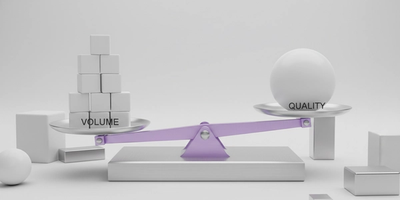
The real question facing sales leaders isn't whether to use AI. It's whether to use it as a replacement or a partner. Try to automate the whole job and you lose the trust that closes complex deals. Ignore AI and you get outrun on speed and volume. Neither option fixes the churn and burnout underneath.
Pair Selling takes the third path. AI carries the prospecting load; your salespeople carry the relationships and close the business. Companies get a steadier pipeline, buyers get fewer spammy touches and more useful conversations, and reps get a job worth staying in.
The future of sales development isn't human or AI. It's human and AI, each doing what it does best. Start your first Pair Selling campaign and see what your team does when AI runs the grind and your salespeople focus on closing. That is Pair Selling. You never sell alone.
← Back to all articles